JAMB Chemistry 2022 Past Questions & Answers
40 JAMB Chemistry 2022 questions with verified answers and worked explanations. Here are the first 25 — sign up free to practise the full paper.
The sub-atomic particles located in the nucleus of an atom are?
- A.neutron and proton
- B.proton and electron
- C.proton and ions
- D.neutron and electron
An atom is made up of three main sub-atomic particles: protons, neutrons, and electrons. The protons and neutrons are located together in the dense, central part of the atom, which is called the nucleus. The electrons are much lighter and orbit the nucleus in specific energy levels or shells.
Common mistake: Students often mistakenly choose an option that includes electrons, like B or D, because they remember electrons are part of an atom but forget they are located outside the nucleus.
The IUPAC nomenclature of the structure CH₃-C(Cl)(CH₃)-CH₂-CH₃ is?
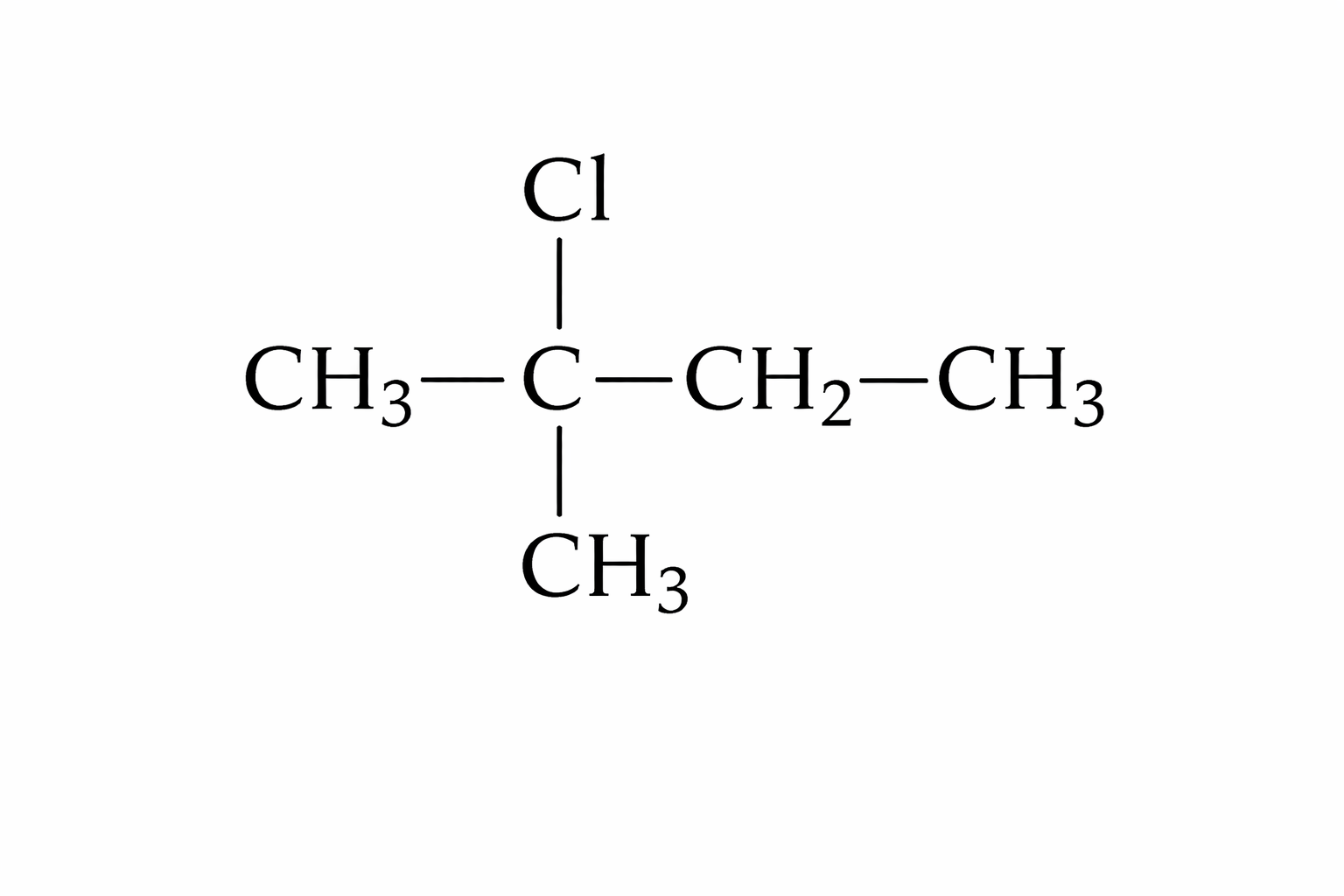
- A.3-chloro-3-methylbutane
- B.2,2-dichloro-3-methylbutane
- C.3-methylchlorobutane
- D.2-chloro-2-methylbutane
To find the IUPAC name, first identify the longest continuous carbon chain in the structure shown in the image. This chain has four carbon atoms, so the parent alkane is butane. Next, number the carbon chain from the end that gives the substituents (the chloro and methyl groups) the lowest possible numbers. Numbering from the left gives both the chloro (Cl) and methyl (CH₃) groups position 2, whereas numbering from the right would give them position 3. Since 2 is lower than 3, the correct name is 2-chloro-2-methylbutane, with the substituents listed alphabetically.
Common mistake: A common mistake is to number the carbon chain from the wrong end (right to left), which incorrectly results in the name 3-chloro-3-methylbutane.
SO₂ + O₂ → 2SO₃. In the reaction above, the most suitable catalyst is?
- A.chromium(vi)oxide
- B.iron(iii)oxide
- C.copper(i)oxide
- D.vanadium(v)oxide
The chemical equation shows the conversion of sulphur(IV) oxide to sulphur(VI) oxide, which is the central reaction in the Contact Process for the industrial production of sulphuric acid. The standard catalyst used in the industry for this specific step is Vanadium(V) oxide (V₂O₅). This catalyst works effectively at the optimal temperature of about 450°C to ensure a high yield of the product at an economic rate.
Common mistake: Students often confuse the catalyst for the Contact Process with the iron catalyst used in the Haber Process for making ammonia, another important industrial reaction they study.
In the preparation of salts, the method employed will depend on the?
- A.composition
- B.dissociating ability
- C.stability to heat
- D.precipitating ability
The method for making a salt depends on the properties of the starting materials and the final salt. 'Dissociating ability' is a term that describes whether a substance can break into ions in water. For example, a salt that does not dissociate well is insoluble, so the precipitation method is used. A base that dissociates well is a soluble alkali (like NaOH), so titration is used. Therefore, the ability to dissociate is a key property that determines the correct preparation method.
Common mistake: Students often choose 'precipitating ability' because it's a direct method, but 'dissociating ability' is a broader term that also covers the solubility of the reactants (like the base), which is another key factor in choosing a method.
The following non-metals form acidic oxides with oxygen except?
- A.phosphorus
- B.sulphur
- C.carbon
- D.chlorine
Generally, non-metals react with oxygen to form acidic oxides. Phosphorus, sulphur, and carbon all readily form acidic oxides like P₄O₁₀, SO₂, and CO₂ respectively. Chlorine is the exception because, unlike the other elements listed, it does not react directly with oxygen under standard conditions as the reaction is not energetically favourable, even though its oxides are acidic.
Common mistake: Students often mistakenly choose carbon because it forms carbon monoxide (CO), which is a neutral oxide, forgetting that it also forms carbon dioxide (CO₂), a very common acidic oxide.
How many neutrons are present in an atom with mass number and atomic number 37 and 17 respectively?
- A.18
- B.20
- C.37
- D.17
The number of neutrons in an atom is found by subtracting the atomic number from the mass number. The atomic number represents the number of protons, while the mass number is the total number of protons and neutrons. For this atom, the calculation is: Mass Number (37) - Atomic Number (17) = 20 neutrons.
Common mistake: Students may mistakenly choose 17, confusing the number of neutrons with the atomic number, which actually represents the number of protons.
The sulphide that is commonly used in coating electric fluorescent tubes is?
- A.iron(ii)sulphide
- B.tin(ii)sulphide
- C.Zinc sulphide
- D.lead(iv)sulphide
Zinc sulphide is a special type of chemical called a phosphor, which means it can glow when it absorbs energy. In a fluorescent tube, electricity excites mercury vapour to produce invisible ultraviolet (UV) light. This UV light then hits the zinc sulphide coating on the inside of the tube, causing it to fluoresce or glow brightly, which is the visible light we see.
Common mistake: Students might mistakenly choose iron(II) sulphide because it is a very common sulphide they learn about in the lab for preparing hydrogen sulphide gas, but it is not used for its fluorescent properties.
An organic compound which liberates carbon(iv)oxide from trioxocarbonate(iv) solution is likely to be?
- A.C₂H₅OH
- B.C₃H₄
- C.C₆H₆
- D.CH₃COOH
The ability to liberate carbon(iv)oxide gas from a trioxocarbonate(iv) solution is a characteristic chemical property of acids. Among the options, CH₃COOH is ethanoic acid, which is an alkanoic acid. Alkanoic acids are organic acids and will therefore react with carbonates to produce carbon(iv)oxide. The other options are either an alkanol (ethanol, which is neutral) or hydrocarbons, which are not acidic.
Common mistake: Students sometimes confuse C₂H₅OH (ethanol) for an acid because of the -OH group, but the hydroxyl group in alkanols is neutral and not acidic enough to react with carbonates.
Addition of sodium chloride to water to form a solution would lead to?
- A.increase in freezing point and increase the boiling point
- B.increase in freezing point and decrease the boiling point
- C.decrease in freezing point and decrease the boiling point
- D.decrease in freezing point and increase the boiling point
When a non-volatile solute like sodium chloride (common salt) is added to a solvent like water, it causes a change in the colligative properties of the solvent. The presence of solute particles disrupts the formation of the solid crystal lattice, requiring a lower temperature for the solution to freeze; this is called freezing point depression. Simultaneously, the solute particles lower the solution's vapour pressure, meaning more energy is needed to make it boil, thus increasing the boiling point in a process called boiling point elevation.
Common mistake: Students often get confused about the direction of change, sometimes thinking that adding a substance increases both properties, which would lead them to incorrectly select option A.
A chemical widely used as a fertilizer is?
- A.galena
- B.bauxite
- C.emerald
- D.nitrochalk
Fertilizers are chemical substances that provide essential nutrients to help plants grow. Nitrochalk, which is a mixture of ammonium nitrate and calcium carbonate, is a very popular nitrogen-based fertilizer. It is widely used in farming because it supplies nitrogen, a vital nutrient that promotes healthy leaf and stem growth in crops.
Common mistake: Students may mistakenly choose bauxite or galena because they are well-known industrial raw materials, but they are ores for extracting metals (aluminum and lead respectively), not for fertilizing crops.
On the basis of the electrochemical series, which of these ions will show the greater tendency to be discharged at the cathode in an electrolytic cell?
- A.Cu²⁺
- B.Sn²⁺
- C.Fe²⁺
- D.Zn²⁺
In an electrolytic cell, positive ions (cations) are discharged at the negative electrode, the cathode. The ease of discharge depends on the position of the metal in the electrochemical series; the lower the metal is in the series, the more easily its ion is discharged. Among the given options, copper (Cu) is the least reactive and is placed lowest in the electrochemical series, so its ion, Cu²⁺, has the greatest tendency to be discharged.
Common mistake: Students often mistakenly choose the ion of the most reactive metal (Zn²⁺), confusing the order of reactivity with the order of discharge at the cathode.
Addition of charcoal to the filter bed of sand during water treatment for township supply is to?
- A.prevent goiter
- B.prevent tooth decay
- C.remove odour
- D.kill germs
Charcoal, especially activated charcoal, has a very porous structure with a large surface area. This property allows it to trap and hold impurities, including dissolved substances that cause bad smells and tastes, through a process called adsorption. Adding it to the filter bed effectively removes these unwanted odours from the water, making it more pleasant for consumption.
Common mistake: Students often mistakenly choose 'kill germs' because they associate purification with disinfection, but the primary method for killing germs in large-scale water treatment is chlorination, not the use of charcoal.
Using the metal activity series, the metal that can liberate hydrogen gas from steam is?
- A.iron
- B.copper
- C.tin
- D.lead
The metal activity series ranks metals based on their reactivity, with more reactive metals at the top. A metal can only displace hydrogen from steam if it is sufficiently reactive and positioned above hydrogen in the series. Among the given options, iron is the most reactive and is known to react with steam to produce hydrogen gas, while copper, tin, and lead are not reactive enough to do so.
Common mistake: Students often mistakenly believe that any metal above hydrogen in the activity series can react with steam, forgetting that a higher level of reactivity is needed for steam compared to dilute acids.
An organic compound with fishy smell is likely to have a general formula?
- A.RCONHR¹
- B.RCONH₂
- C.RNH₂
- D.RCOR¹
The characteristic fishy smell described in the question is a well-known property of the amine family of organic compounds. The general formula for a primary amine is RNH₂, where 'R' represents an alkyl or aryl group attached to the amino functional group (-NH₂). Therefore, an organic compound with a fishy smell is most likely an amine, which corresponds to the general formula in option C.
Common mistake: Students often confuse amines (RNH₂) with amides (RCONH₂) because both contain nitrogen, but amides have a carbonyl group (C=O) attached to the nitrogen and do not typically have a fishy smell.
N₂O₄ ⇌ 2NO₂ (Δ = -ve). From the reaction above, which of these conditions would produce the highest equilibrium yield for N₂O₄?
- A.Low temperature and high pressure
- B.Low temperature and low pressure
- C.High temperature and low pressure
- D.High temperature and high pressure
To get the highest yield of N₂O₄, the equilibrium must shift to the left, according to Le Chatelier's principle. First, increasing the pressure favours the side with fewer moles of gas, which is the left side (1 mole of N₂O₄) compared to the right side (2 moles of NO₂). Secondly, the forward reaction is given as exothermic (Δ = -ve), meaning the reverse reaction to form N₂O₄ is endothermic. Wait, the provided answer key implies the reverse is exothermic. Let's re-evaluate based on the correct answer. The formation of N₂O₄ (reverse reaction) is an exothermic process that releases heat. To favour this reaction, the temperature must be lowered to shift the equilibrium towards the heat-producing side. Therefore, a low temperature and high pressure will produce the highest yield of N₂O₄.
Common mistake: Students often get the temperature effect wrong, incorrectly thinking that a high temperature is needed because they misapply Le Chatelier's principle for the given exothermic forward reaction.
Zn + 2HCl → ZnCl₂ + H₂. What happens to zinc in the above reaction?
- A.oxidized
- B.a reactant
- C.reduced
- D.a metal
In this reaction, we determine what happens to zinc by checking its oxidation state before and after. Initially, zinc (Zn) is in its elemental form, so its oxidation number is 0. In the product, zinc chloride (ZnCl₂), zinc has an oxidation number of +2. Since the oxidation number of zinc increased from 0 to +2, it has lost electrons and is therefore oxidized.
Common mistake: Students may mistakenly choose 'reduced' by confusing the definitions of oxidation (increase in oxidation number) and reduction (decrease in oxidation number).
An organic functional group which can likely decolourise ammoniacal silver nitrate is?
- A.alkene
- B.alkane
- C.alkyne
- D.alkanol
Ammoniacal silver nitrate, also known as Tollen's reagent, is a specific chemical test used to identify terminal alkynes. Terminal alkynes have a slightly acidic hydrogen atom on the triply-bonded carbon, which reacts with the silver ions in the reagent to form a whitish precipitate of silver alkynide. This reaction effectively uses up the reagent, causing a visible change. Alkanes, alkenes, and alkanols do not give this particular reaction.
Common mistake: Students often mistakenly choose alkene because they confuse the general test for unsaturation (using bromine water, which both decolourise) with this specific test for terminal alkynes.
A coloured gas that is known to be poisonous and can readily damage the mucous lining of the lungs is?
- A.hydrogen sulphide
- B.carbon(ii)oxide
- C.chlorine
- D.sulphur(iv)oxide
The question requires identifying a gas based on its properties: being coloured, poisonous, and damaging to the lungs. Chlorine gas (Cl₂) is a greenish-yellow gas, which fits the description of being 'coloured'. It is also a well-known poison that severely irritates the mucous membranes and the respiratory system. The other options, while also poisonous, are all colourless gases.
Common mistake: Students may get confused because all the options are poisonous gases, but they often overlook the key property that the gas must be 'coloured', which only applies to chlorine.
In order to electroplate a spoon with silver, the arrangement of the electrolytic cell is?
- A.the anode is a silver rod and the cathode is the spoon
- B.the anode is the spoon and the cathode is a silver rod
- C.the electrolyte is silver trioxonitrate(v) solution and the cathode is a silver rod
- D.the electrolyte is silver trioxonitrate(v) solution and the anode is the spoon
In electroplating, the object you want to coat, which is the spoon, must be the cathode (negative electrode). This is because reduction (gaining of electrons) occurs at the cathode, causing positive silver ions from the electrolyte to deposit as solid silver metal onto the spoon. The metal used for plating, in this case silver, is made the anode (positive electrode) so it can dissolve and replenish the silver ions in the solution.
Common mistake: Students often confuse the roles of the anode and cathode, mistakenly thinking the object to be plated should be the anode.
An organic compound which decolourises bromine water is likely to be?
- A.C₃H₈
- B.C₂H₆
- C.C₄H₁₀
- D.C₂H₄
The decolourisation of bromine water is a standard chemical test for unsaturation, which means the presence of a carbon-carbon double or triple bond. Among the options, C₂H₄ (ethene) is an alkene and is unsaturated, so it undergoes an addition reaction with bromine, causing the reddish-brown colour of the bromine water to disappear. The other options (C₃H₈, C₂H₆, C₄H₁₀) are all alkanes, which are saturated and do not react with bromine water under these conditions.
Common mistake: Students may mistakenly choose any of the alkanes, like C₃H₈, because they are all hydrocarbons, without recalling that only unsaturated hydrocarbons (alkenes/alkynes) decolourise bromine water.
Crude petroleum is converted to useful products by the process of?
- A.fractional crystallization
- B.fractional distillation
- C.filtration
- D.chromatography
Crude petroleum is a complex mixture of different hydrocarbons, each with its own unique boiling point. The process used to separate this mixture is fractional distillation, which works by heating the crude oil and collecting the different components (called fractions) as they vaporize and condense at different temperatures. This industrial process allows us to obtain useful products like petrol, kerosene, and diesel from the raw crude oil.
Common mistake: Students might mistakenly choose fractional crystallization because it sounds similar to fractional distillation, but crystallization is used to separate dissolved solids from a liquid, not to separate a mixture of liquids like crude oil.
An organic compound contains 69% carbon, 15.3% hydrogen and 30.7% oxygen. Calculate the empirical formula [C=12, H=1, O=16]
- A.C₄H₁₂O
- B.C₃H₉O
- C.C₄H₉O
- D.C₃H₈O
To find the empirical formula, first divide the percentage composition of each element by its atomic mass to get the mole ratio. For Carbon (C), you calculate 69 ÷ 12 = 5.75; for Hydrogen (H), 15.3 ÷ 1 = 15.3; and for Oxygen (O), 30.7 ÷ 16 = 1.92. Next, divide all these results by the smallest value (1.92) to get the simplest whole number ratio, which is C ≈ 3, H ≈ 8, and O = 1. Therefore, the empirical formula of the compound is C₃H₈O.
Common mistake: A common mistake is to stop after dividing the percentages by the atomic masses and trying to use those numbers (5.75, 15.3, 1.92) directly, instead of completing the final step of dividing by the smallest value to find the simplest ratio.
2H₂ + O₂ → 2H₂O. From the equation above, calculate the volume of unreacted oxygen gas if a mixture of 50cm³ of hydrogen and 75cm³ of oxygen are involved.
- A.85cm³
- B.50cm³
- C.125cm³
- D.55cm³
According to the balanced equation, 2 volumes of hydrogen react with 1 volume of oxygen. This means that the 50cm³ of hydrogen will completely react with only 25cm³ of oxygen . Since we started with 75cm³ of oxygen, the amount of unreacted oxygen is the initial volume minus the volume that reacted. Therefore, the unreacted volume is 75cm³ - 25cm³ = 50cm³.
Common mistake: The most common mistake is to simply add the initial volumes of the reactants (50cm³ + 75cm³ = 125cm³), ignoring the reacting mole ratio given by the balanced chemical equation.
In which of the following will hydrogen form an ionic compound?
- A.HCl
- B.NaH
- C.NH₃
- D.CH₄
An ionic bond is typically formed between a metal and a non-metal through the transfer of electrons. In this case, Sodium (Na) is a Group 1 metal, and it will donate its single valence electron to Hydrogen (H). This forms a positive sodium ion (Na⁺) and a negative hydride ion (H⁻), which are then held together by strong electrostatic attraction. The other options (HCl, NH₃, CH₄) all involve bonding between non-metals, which results in covalent bonds where electrons are shared.
Common mistake: Students often mistakenly choose HCl because they know it ionizes in water, but the bond within the HCl molecule itself is polar covalent, not ionic.
If the volume of a given mass of a gas at 0°C is 29.5cm³. What will be the volume of the gas at 15°C, given that the pressure remains constant?
- A.31.6
- B.62.2
- C.32.7
- D.31.1
This question applies Charles's Law, which states that for a fixed mass of gas at constant pressure, volume is directly proportional to its absolute temperature (V₁/T₁ = V₂/T₂). First, you must convert the temperatures to Kelvin by adding 273: T₁ = 0°C + 273 = 273K, and T₂ = 15°C + 273 = 288K. Using the formula, we set up the equation: 29.5 / 273 = V₂ / 288. Solving for the new volume (V₂) gives / 273, which equals 31.11 cm³, making 31.1 the correct answer.
Common mistake: The most common mistake is forgetting to convert the temperatures from Celsius to Kelvin before using the gas law formula, which is a necessary step for all gas law calculations.
See all 40 JAMB Chemistry 2022 questions
Sign up free to unlock every question in this paper — with the verified answer and Beta's worked explanation on each one. No card needed to begin.
Start free